Two Nights, 9 Feet Tall: Josh Morris's Owensboro Bigfoot Sighting — and Why Kentucky's Western Coalfields Are Quietly Heating Up
On consecutive nights in late July 2026, an Owensboro-area witness named Josh Morris came face to face with what he estimates was an 8-to-9-foot-tall bipedal figure in the wooded hills just south of town near the Barren Harbor Hills area of Daviess County. He saw it twice. The encounter has now circulated through the regional research community and is the reason the heartland's newest Bigfoot hotspot isn't in Brown County, Indiana, or the Hocking Hills of Ohio. It's in western Kentucky — and the inaugural Blue Bridge Squatch Fest on September 26 is about to put Owensboro on the Sasquatch map in a way that hasn't happened before.
What Josh Morris Saw
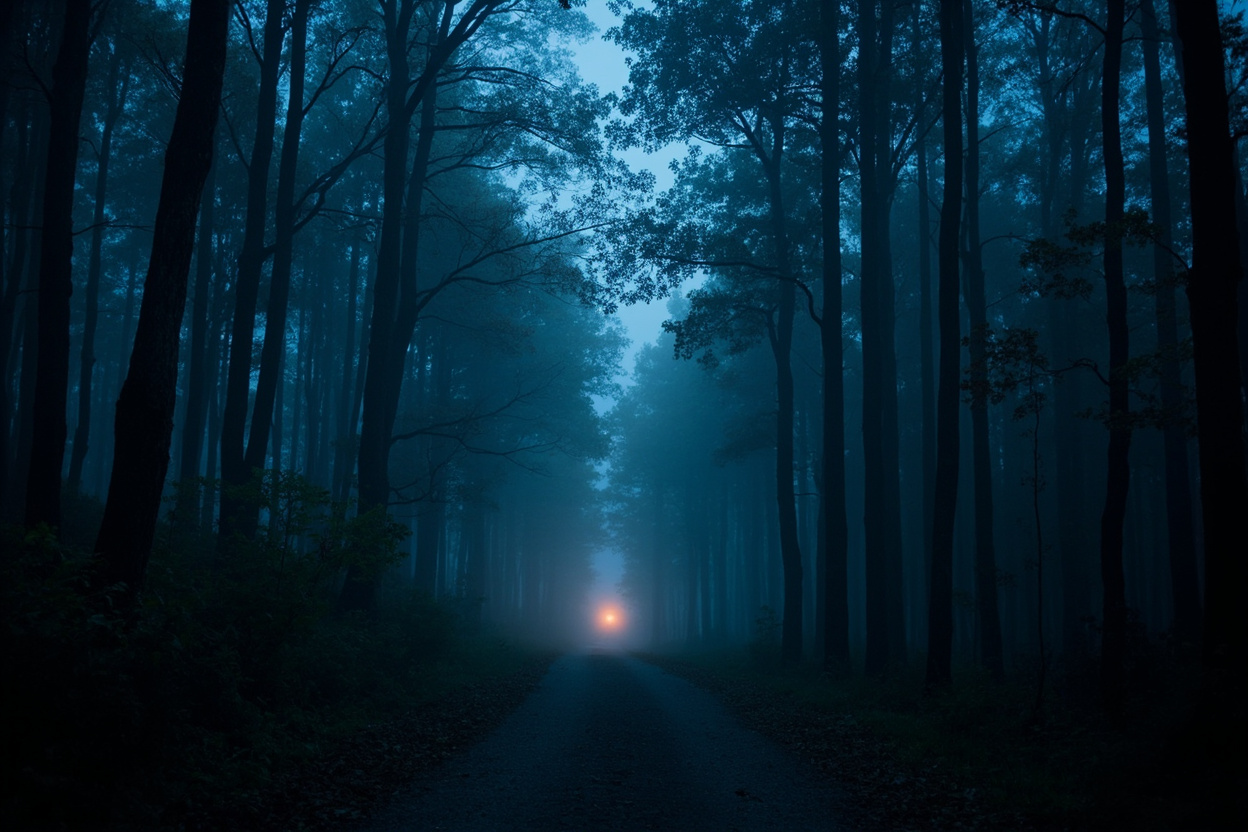
Morris's account — first posted publicly through the Modern Operator Bigfoot page and now circulating across regional research circles — describes two separate encounters, on two consecutive nights, in roughly the same stretch of timber south of Owensboro. The Barren Harbor Hills area sits on the Kentucky side of the Ohio River, west of town, where the Daviess County hills roll down toward the river bottoms in classic ridge-and-hollow country. It's heavily wooded, lightly populated after dark, and connected by continuous forest all the way north to the Green River.
"Josh Morris encountered an 8-9 foot tall creature twice near Owensboro, Kentucky. Bigfoot Sighting: 9-Foot Creature Near Barren Harbor Hills!"
— Modern Operator — 9-Foot Creature Near Barren Harbor Hills (Facebook video, late Jul 2026)
According to the report, the figure Morris describes stands well over eight feet tall, is covered head-to-toe in dark hair, moves with a long-striding bipedal gait, and is associated with strong, sustained wood-knock and vocalization activity in the surrounding hollows in the days after the sighting. None of this is unusual as a sighting description — but the fact that it happened on two consecutive nights, in the same stretch of timber, with no apparent flight response from the animal is what's drawn researcher attention.
A creature that doesn't run, that comes back the next night, and that uses the same drainage both times — that's not a wandering transient. That's a resident.
Why Western Kentucky, Specifically
Daviess County is one of the most under-reported counties in Kentucky for Bigfoot activity, and that's a problem researchers have been quietly working on for years. The reason it's under-reported isn't that there's nothing there. It's that the western Kentucky coalfields — the irregular patchwork of reclaimed surface mines, second-growth oak-hickory ridges, river-bottom sloughs, and thick unincorporated timber that runs through Daviess, Ohio, Butler, Muhlenberg, and Hopkins counties — is the single most-ignored landscape in the entire heartland.
It's not ignored because it's bad habitat. It's ignored because:
- The timber is private. Most of the ridge-and-hollow country west of Owensboro is private farmland and private woodlots. Researchers need landowner permission to set trail cams, and many of these properties have been in the same family for three or four generations.
- The towns are small. There's no major regional outlet covering western Kentucky Bigfoot news. Owensboro's local paper covers high school football and the smelter. Anything weird in the woods stays weird in the woods.
- The river corridor is busy. The Ohio River, the Green River, the Nolin River, and Barren River all cross this region. There's a lot of barge traffic, a lot of public land along the rivers, and a lot of nighttime activity from fishermen and duck hunters — which means a lot of low-light encounters that don't get reported because the witness assumes it's a deer, a bear, or a person.
That's what makes Morris's account different. He didn't shrug it off. He reported it, and he reported it twice, because it happened twice.
The Coalfields Are Quietly Heating Up
Morris's Owensboro sighting isn't an isolated event. It's the latest data point in a pattern that regional researchers have been tracking since the spring.
A few of the dots on the map worth connecting:
- Muhlenberg County — west of Owensboro, deep in the coalfields — has logged an increasing number of late-night vocalization reports from turkey hunters in the reclaimed-mine timber over the last 18 months. Researchers have noted the reports tend to cluster around the same two-week windows each spring and fall.
- Butler County — directly south of Daviess — has a long thread of unverified track finds going back to the early 2000s, most of them along the Green River drainage.
- The Ohio County / Butler County line — east of Owensboro — has produced multiple "large bipedal figure at the tree line" reports from bowhunters over the past three deer seasons.
- The Daviess County hills themselves — south and west of Owensboro proper — are the exact stretch Morris describes. Local landowners have been telling researchers for years about bent saplings, large barefoot-style tracks, and wood-knocks at night. Morris is the first witness to go on the record publicly with a clear sighting from this area.
What you're looking at is a continuous belt of forested, ridge-and-hollow, river-bottom country running from the Green River bottoms up through Daviess County and across the Ohio River into southern Indiana. It is, geographically, the same kind of habitat as the Whitewater corridor on the other side of the river — and it's connected to it.
The Geographic Bridge to Southern Indiana
Owensboro sits across the Ohio River from Spencer County, Indiana, and within an hour's drive of Perry County, Dubois County, and Warrick County. The Ohio River is not a barrier for a large, wading, river-crossing mammal — it's a corridor.
That's important because the southern Indiana side of that river is already a documented Bigfoot zone. Researchers have logged credible reports out of Perry and Dubois counties for years, the IBRO has been expanding its coverage south, and the September 25–26 Indiana Bigfoot Conference in Brown County is close enough that western-Kentucky witnesses regularly attend. The same goes for the Owensboro side of the river — and that's exactly the audience the Blue Bridge Squatch Fest is being built for.
"Bigfoot Is Coming to Town! a full-scale Bigfoot & paranormal celebration coming this fall. The event lands September 26 at the Kentucky Sound Stage, formerly the Malco Theater, on Frederica Street."
— What's Up Owensboro — "Bigfoot Is Coming to Town" (Facebook, Feb 24, 2026)
The Blue Bridge Squatch Fest
Here's where the sighting and the event collide.
On September 26, 2026 — five weeks from now — Owensboro will host the inaugural Blue Bridge Squatch Fest at the Kentucky Sound Stage on Frederica Street (the former Malco Theater). The Crittenden Press and the Owensboro Messenger-Inquirer have both covered the announcement. The festival is family-friendly, cryptid-themed, and built around the same model that's worked in other small heartland cities: a Bigfoot meet-and-greet, regional researchers on stage, food trucks, local handmade vendors, and a "tag your squatch squad" social media push.
That's a notable thing for a city of 60,000 to put together. It signals that the Owensboro-Bigfoot connection isn't just one witness with a story — it's a community that's decided to own it.
"Owensboro, Kentucky's inaugural Bigfoot and Paranormal Festival … September 26, 2026 … MEET BIGFOOT."
— Blue Bridge Squatch Fest — official festival reel (Instagram, Jul 2026)
What Local Researchers Are Saying
The two things Owensboro-based researchers keep emphasizing are timing and location.
On timing: late July through early September is the peak vocalization window across the western Kentucky coalfields. That's when the canopy closes, when the cicadas are at full chorus (which makes auditory detection harder for the witness but doesn't suppress the wood-knock pattern), and when the turkey flocks start to disperse — which is when the same hardwood ridges where Morris encountered the creature get walked by people who are listening for turkey sounds and end up listening for something else entirely.
On location: Barren Harbor Hills is exactly the kind of terrain a regional researcher would put on a Bigfoot probability map. Steep, narrow hollows. Continuous canopy cover. A creek bottom. Reclaimed-mine edge habitat to the south. Multiple private woodlots. Almost no nighttime foot traffic except for the occasional deer hunter or coon hunter running dogs. It's the country that doesn't get reported on, because the country doesn't generate sightings outside the people who live there.
Morris is one of those people.
What It Means for the Heartland Corridor
We've been writing all summer about the Heartland Sasquatch Corridor — the continuous forested belt that runs from the Hocking Hills of Ohio, through the Whitewater Valley of eastern Indiana, down through the Mississinewa and Wabash river valleys of central Indiana, into the coalfields of western Kentucky, and back up the Green River to Mammoth Cave.
Morris's Owensboro sighting is the western Kentucky anchor of that corridor — and it's the first anchor in that part of the map that's been put on the record publicly in 2026.
Combined with what we've been covering this summer:
- The Connersville trail cam (eastern Indiana, Whitewater corridor, Aug 19)
- The Mississinewa Triangle (central Indiana, Aug 17)
- Morgan-Monroe's tree-walking Bigfoot (southern Indiana, Aug 15)
- The Indiana Bigfoot Conference (Brown County, Sept 25–26)
- The Ohio Flap of 2026 (NE Ohio, Portage/Trumbull counties, Mar 2026)
…the pattern is the same shape we keep coming back to. It's not one state, it's one corridor. And that corridor just got a Kentucky chapter with a witness who's willing to be on the record.
What's Next for the Daviess County Hills
Three things worth watching in the next 60 days.
First, follow-up reports. Researchers expect the late-July sighting to bring out a wave of "I saw something too" reports from neighbors who didn't want to be first on the record. That's the standard pattern after a credible sighting in a small community, and the IBRO / regional network is already fielding those calls.
Second, the Blue Bridge Squatch Fest on September 26. The event is five weeks out and the regional press coverage is building. If the festival draws the kind of crowd the organizers are hoping for, you'll see a much louder Kentucky Bigfoot story through the fall — and that means more witnesses coming forward, more researchers in the field, more trail cams in the Daviess County hills, and a much higher probability of the next photographic or audio evidence coming out of western Kentucky.
Third — and most importantly — the field season is opening. August through November is when western Kentucky gets reports. The canopy closes, the nights lengthen, the deer hunters start moving at dawn and dusk, and the ridges south of Owensboro get walked by the people who live out there. If the Daviess County hills are going to deliver another sighting, the next three months are when it will happen.
Josh Morris went first. The hills will decide who goes next.
Sources:
• Modern Operator — 9-Foot Creature Near Barren Harbor Hills (Facebook video, late Jul 2026)
• What's Up Owensboro — "Bigfoot Is Coming to Town" (Facebook, Feb 24, 2026)
• Crittenden Press — Blue Bridge Squatch Fest announcement (Facebook, Feb 2026)
• Blue Bridge Squatch Fest — official festival reel (Instagram, Jul 2026)
• Blue Bridge Squatch Fest — Bigfoot's birthday celebration reel (Instagram, May 2026)
• BFRO — Kentucky state report archive (Daviess / Ohio / Butler / Muhlenberg county reference)
• USGS Kentucky — Green River, Barren River, and Nolin River drainage (habitat continuity reference)
Live in western Kentucky — Daviess, Ohio, Butler, or Muhlenberg County? Seen something in the hills? Submit your sighting →