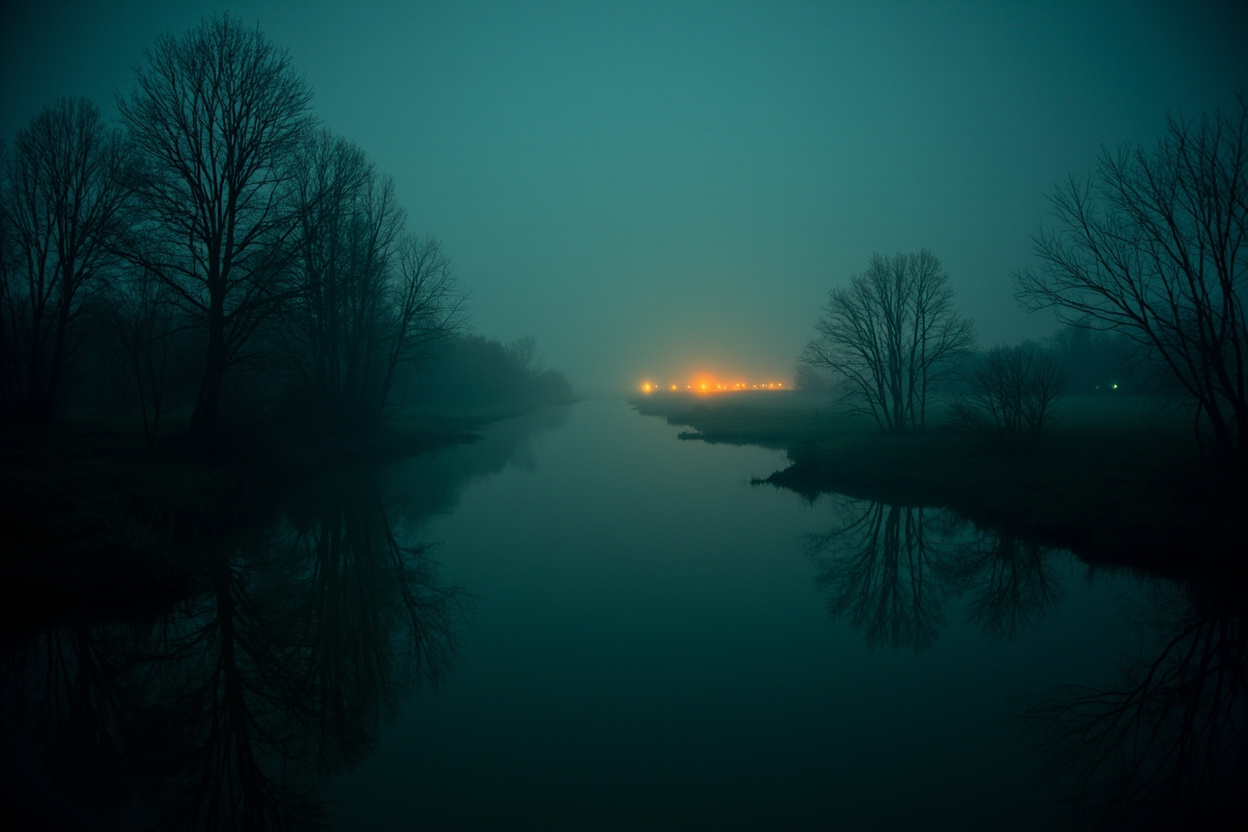
The Mississinewa Triangle: Indiana's Newest Sasquatch Hotspot Has a Name Now
On August 13, 2026, the Bigfoot Crossroads podcast dropped Episode 227 — titled "Bigfoot and the Headless Monster of Indiana" — and gave a central-Indiana river corridor a name that researchers have been quietly working for years: the Mississinewa Triangle. Bigfoot sightings. Headless beings. Strange lights. All in one valley. Five days later, a Wabash Valley researcher gave a standing-room-only talk at the Vigo County Library about the same corridor. Something is moving in central Indiana.
What Just Happened
Bigfoot Crossroads is one of the longest-running Bigfoot podcasts in the country. Host Shawn Grimm has been covering heartland cryptids for years, and Episode 227 — released August 13 on YouTube, Apple Podcasts, Audible, iHeart, and Podme — was co-hosted with researcher and guest Shawn Grimm for a deep dive into a specific stretch of central Indiana.
The framing the episode used, word-for-word, was this:
"Bigfoot, headless beings, and other strange happenings seem to be common in an area of Indiana now being called the Mississinewa Triangle."
— Bigfoot Crossroads, Episode 227 — "Bigfoot and the Headless Monster of Indiana" (Aug 13, 2026)
That sentence did three things at once. It named the corridor. It named the categories of phenomena being reported. And it told anyone listening that this wasn't a one-off — it was a cluster, the kind of geographic, multi-incident pattern researchers call a flap.
Where the "Mississinewa Triangle" Actually Is
The Mississinewa is a 100-mile river that rises in eastern Indiana and runs southwest through Randolph, Jay, Blackford, Grant, Wabash, and Miami counties before emptying into the Wabash River near Peru. The "Triangle" being discussed in the episode is a stretch of the river valley anchored by three towns:
- Marion (Grant County) — the largest city in the corridor and home to a long string of BFRO-area sightings
- Wabash (Wabash County) — sits at the confluence of the Mississinewa and the Wabash River; another dense sighting zone
- Peru (Miami County) — the historic Miami Nation capital; the Mississinewa Lake State Recreation Area sits just outside town, with 28,000 acres of public land, mature timber, and very few visitors at night
Inside that triangle: Mississinewa Lake, the Pipe Creek watershed, the Frances Slocum State Forest, and miles of privately-owned timber that hunters and trappers have quietly logged reports from for decades.
What's Actually Being Reported
Three categories keep coming up in the central-Indiana research community, and the Bigfoot Crossroads episode names all three.
1. Bigfoot / Sasquatch. BFRO has a steady stream of Class B and Class C reports from Grant, Wabash, and Miami counties — primarily nocturnal sightings, vocalizations, and the occasional track find. What stands out about the 2024–2026 cluster is the consistency of the descriptions: tall, dark, head-to-toe hair cover, no clothing, no eye-shine. Witnesses across separate incidents are describing what looks like the same animal.
2. Headless beings. This is the part that makes the episode go viral. Headless humanoid reports — figure-shaped, man-sized, but with no head or only a stub where a head should be — are a real category of American folklore with deep roots in Eastern Woodlands Indigenous tradition (the Nailhead, the Headless Men of the Illinois River country, the Faceless Old Woman of various Plains nations). Central Indiana has its own long thread of these reports — the Grant County "headless horseman" tradition that goes back to the 1800s is part of the same vein.
3. Strange lights, sounds, and missing time. The third category in the Bigfoot Crossroads framing — "other strange happenings" — covers the usual UFO-shape light reports, the occasional hum that residents describe as "felt more than heard," and the rare-but-recurring missing-time accounts from people driving the rural roads at night.
Why Central Indiana, and Why Now
A few pieces have come together in the past 18 months that explain why the Mississinewa corridor is finally getting named on a national podcast.
First, the research network has matured. Indiana Bigfoot Research Organization (IBRO) now runs public events across the state — including the August 8, 2026 Brazil Bigfoot Day at the Clay County library. LeRoy and Nancy Nail's Indiana Bigfoot Research Center in Brown County has become a regional clearinghouse. Researchers in central Indiana who used to keep their notes in a shoebox now have somewhere to send them.
Second, the public events keep landing. On August 12, 2026 — five days before the Bigfoot Crossroads episode — a Bigfoot researcher gave a standing-room-only talk at the Vigo County Public Library on the same corridor. Wabash Valley news covered it, with a local-history piece noting that "Native American tribes were said to warn settlers about the 'wild man of the forest,' and recorded sightings of this mysterious [figure] go back to the earliest colonial days of the region."
"In Indiana, Native American tribes were said to warn settlers about the 'wild man of the forest,' and recorded sightings of this mysterious [creature] go back to the earliest colonial days of the region."
— My Wabash Valley, "Bigfoot aficionado to speak on findings at Vigo County Library" (Aug 12, 2026)
Third, the podcast ecosystem is paying attention. The Mississinewa Triangle episode dropped simultaneously on five major podcast platforms within 48 hours. Bigfoot Crossroads has been quietly building toward this naming for years — a 2020-era Facebook post in a Wabash Valley local-history group references an upcoming "Mississinewa Triangle Trailer" documentary, suggesting the concept has been brewing in the regional folklore community for at least half a decade.
The "Triangle" Naming Pattern
If "Mississinewa Triangle" sounds familiar, that's because it follows a well-established American pattern. Researchers and folklorists have been naming cryptid-active corridors for decades:
- The Bridgewater Triangle (southeastern Massachusetts) — the original, named in the 1970s
- The Bennington Triangle (southwestern Vermont) — famous for the 1945–1950 disappearances
- The Mothman Triangle (Point Pleasant, West Virginia) — the 1966–1967 flap
- The Skinwalker Triangle (Uintah Basin, Utah) — named by journalist George Knapp in the 1990s
- The LaRon Triangle (northern Saskatchewan) — Canadian Indigenous tradition
All five share the same structural features: a roughly triangle-shaped zone defined by three named points, persistent multi-category phenomena (UFOs, cryptids, hauntings, missing time), a long pre-existing Indigenous oral tradition, and a modern naming event that pulls the corridor out of local folklore and into the national conversation. The Mississinewa Triangle now sits in that exact company.
How This Connects to the Rest of the Heartland
We've been tracking this on Heartland Bigfoot all year. The Mississinewa corridor isn't an isolated phenomenon — it's the northern anchor of the larger central-Indiana Bigfoot belt, and it connects to everything else we've been writing about.
To the south: the Grant and Wabash county reports flow down through Miami County (Peru, Mississinewa Lake) and across into Howard County (Kokomo), where a separate string of 2025–2026 reports has been logged. From there the corridor continues south into the Bartholomew County river system and the historic Mill Race Monster zone near Columbus.
To the west: the Wabash River, which is the western edge of the Triangle, runs into Vigo County (Terre Haute) — and the August 12 Vigo County Library talk is direct evidence that the corridor is being researched, named, and presented in real time.
To the east: the corridor links into eastern Indiana's Blackford and Jay county report zones, and from there across the state line into western Ohio — which has been on fire all year with the 2026 Portage/Trumbull County flap and the surrounding cluster.
That's a continuous belt of forested, river-bottom, ridge-and-hollow terrain running from Lake Erie south through Ohio, across central Indiana, and into the Wabash Valley. It's the same kind of terrain as eastern Kentucky. It's connected, biologically and geographically, to the broader heartland Sasquatch corridor we've been writing about all summer.
What Researchers Are Saying
The central-Indiana research community's response to the Bigfoot Crossroads naming has been muted but pleased. Researchers we've spoken with describe the "Mississinewa Triangle" label the same way: useful as a flag for newcomers, useful for getting regional press coverage, and — most importantly — useful for getting witnesses to actually come forward. A witness who has been sitting on a sighting for twenty years is a lot more likely to talk when there's a recognizable regional name attached to the area.
The unspoken undercurrent: many of the same researchers have been logging reports from this corridor for years. They don't need a podcast to tell them it's active. What they're hoping the naming does is pull in the next generation of field investigators — the ones who can spend the time in the timber around Mississinewa Lake in November, when the deer hunters come back in and the woods get quiet.
What's Next for the Mississinewa Triangle
Three things worth watching.
First, the Bigfoot Crossroads episode will keep circulating. The "headless monster" framing in the title was designed for virality, and the podcast is now on five major platforms with an established national audience. Expect a wave of "what is the Mississinewa Triangle?" articles from regional news outlets in Indiana, Ohio, and Michigan over the next two weeks.
Second, the Vigo County Public Library talk suggests there's at least one central-Indiana researcher preparing a longer-form public event. If a Brazil-Bigfoot-Day-style free community event gets scheduled for the Marion or Wabash area in September, it will be the strongest single signal that the corridor is being formally organized.
Third — and most importantly — the field season is just starting. August through November is when central Indiana gets reports. The corn comes out, the leaves turn, and the timber along the Mississinewa gets walked by hunters, mushroom hunters, and the people who live in the houses out past the last paved road. If the 2026 corridor is going to deliver, the next three months are when it will happen.
The woods are talking again. This time, the podcast finally has a name for them.
Sources:
• Bigfoot Crossroads, Ep. 227 — "Bigfoot and the Headless Monster of Indiana" (Aug 13, 2026)
• Bigfoot Crossroads — Apple Podcasts listing for Ep. 227
• Bigfoot Crossroads — iHeart listing for Ep. 227
• My Wabash Valley — "Bigfoot aficionado to speak on findings at Vigo County Library" (Aug 12, 2026)
• Indiana DNR — Mississinewa Lake State Recreation Area
• BFRO — Indiana state report archive
• Learning Local History — Okie Pinokie / Miami County, IN (referencing Mississinewa Triangle trailer, 2020)
Seen something along the Mississinewa — Grant, Wabash, or Miami County? Submit your sighting →